
2026-08-30
BOJ Deputy Chief Calls for More Rate Hikes on Inflation Risks
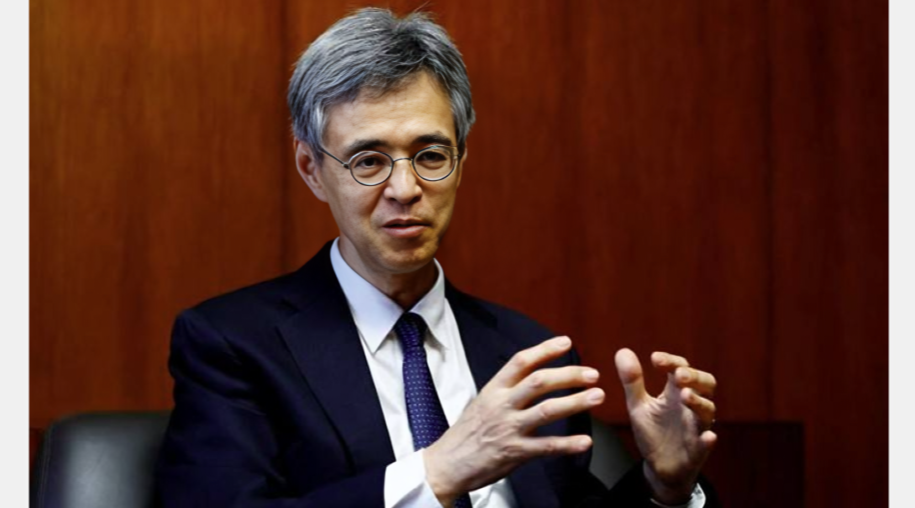
The Bank of Japan should continue to raise its key policy rate, BOJ Deputy Governor Ryozo Himino said Thursday, stressing the weaker yen’s impact on inflation, with his comments coming as the market widely expects a rate hike at the next policy meeting in September.
“We should pay greater attention to the upside risk to prices than in the past,” Himino said at an event in Saitama, near Tokyo, citing higher crude oil prices stemming from the Middle East conflict, rising semiconductor prices driven by the increase in global AI-related demand, and the recent yen’s fall as factors.
“Raising rates in a timely manner will help avoid inflation acceleration and abrupt rate hikes in the future,” serving the best interests of small- and medium-sized firms and mortgage borrowers, Himino said.
At a press conference, Himino did not offer clear signals about the timing or the pace of the next rate hike but said the central bank will consider it at every meeting, including the next one on Sept. 17-18, by looking at whether prices and economic activity are moving within expectations.
At its previous meeting in July, the central bank left the benchmark rate steady, after lifting it to a 31-year high of 1.0 percent in June.
After BOJ Governor Kazuo Ueda referred to “speeding up the pace of rate hikes,” if necessary, at a post-meeting press conference in July, financial markets began to anticipate a rate hike in September.
Previously, the market expected the bank to raise the rate once every six months, which would have meant a hike in December following the increase in June.
A joint yen-buying intervention by the Japanese and U.S. authorities during New York trading hours on July 31 to stem the yen’s fall also led to expectations for a September hike, as doing so may help curb the Japanese currency’s depreciation.
The yen’s fall against the U.S. dollar in recent years is partly attributable to the wide U.S.-Japan interest rate differential.
Some market participants expect a BOJ rate hike, coupled with the U.S. Federal Reserve delaying its own rate hike, would spur yen-buying by narrowing the interest rate differential.
The first Japan-U.S. joint market intervention in 15 years sent the yen surging to the 157 level after hitting 163.99 on July 23, its weakest level since 1986. But the yen has since gradually weakened once again, moving in the 159 zone in recent days.
The yen has faced selling pressure amid mounting fears about Prime Minister Sanae Takaichi’s expansionary fiscal policy and how it will be funded. A weak yen poses risks to the Japanese economy by inflating import costs.
Himino stressed in the speech that while monetary policy does not target exchange rates, the yen’s depreciation has an impact on economic activity and prices and the “pass-through from exchange rates to prices seems to be getting stronger.” “The pass-through can influence underlying inflation through changes in inflation expectations,” Himino said, adding these developments are “important factors to consider” in conducting monetary policy, which aims to stably achieve a 2 percent inflation target.
Source: QATAR TRIBUNE