
2026-10-06
China Ramps Up AI Talent Push as US Tech Race Heats Up More
As China seeks to build on its “engineer dividend” – the advantage created by a vast pool of engineers built up over decades it is directing more talent towards artificial intelligence and other hi-tech fields central to its competition with the US.
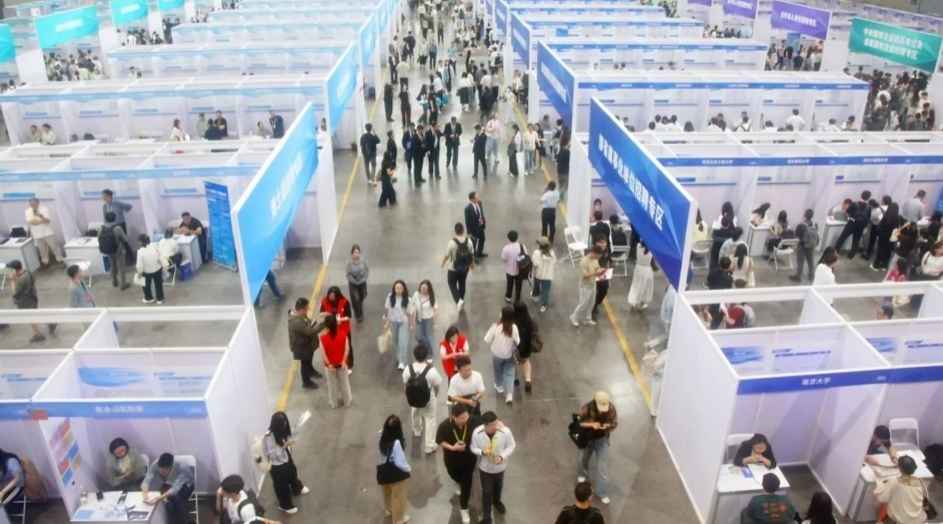
The push comes as fresh graduates face mounting pressure to find jobs, underscoring the challenge of aligning China’s expanding higher education system with the needs of its changing economy.
But Beijing has a narrow window to act, an education expert said, with the number of students entering the country’s higher education system expected to peak in the coming years before entering a longer-term decline. Last month, the Ministry of Education announced plans to expand undergraduate enrolment at the country’s top universities by 76,000 places between 2027 and 2030.
The expansion would “strengthen basic and frontier research and drive breakthroughs in key technologies, building a strong force to support major national strategic priorities”, Guo Peng, the head of the ministry’s development planning department, said at a news conference in Beijing. It would focus on training talent for strategic industries and fields facing acute shortages, including AI, integrated circuits, biomedicine and new energy, he said.The government would draw on central-budget funding and ultra-long special treasury bonds to support new campuses and improvements to dormitories, canteens, sports facilities and laboratories at the elite universities, Guo said.
The nurturing of tech talent has become a prominent factor in the race between the United States and China to develop cutting-edge technologies, with Chinese AI models such as DeepSeek and Kimi K3 narrowing the gap with American rivals and fuelling jitters in Silicon Valley over the sustainability of the US lead in frontier AI.
Bloomberg reported last year that China’s “engineer dividend” was paying off, citing data showing the number of engineers in the country surged from around 5.2 million in 2000 to some 17.7 million in 2020.China employed 41 per cent of the world’s leading AI researchers last year, pulling ahead of the US at 34 per cent, according to a study released last week by the Carnegie China think tank.
Despite that growing pool of Chinese talent, shortages persist in specialised sectors. According to a campus recruitment report by hiring platform 51job, there were 25 job openings for every applicant in integrated-circuit design this year, 15 for every applicant in algorithm engineering and 14 for every applicant in autonomous driving.Some leading universities have announced plans to expand enrolment in those fields this year.
Southeast University said it would add 600 places for disciplines including AI, integrated circuits and robotics, while Xidian University’s enrolment plan added 400 places, focusing on high-demand fields such as communications, integrated circuits and AI. The expansion is part of a broader plan to add more than 100,000 undergraduate places at China’s “double first-class” universities by 2030. The universities had added 62,000 places since 2024, Guo said.
The “double first-class” initiative is a performance-based funding programme that aims to turn more than 100 Chinese universities and their top departments into global academic heavyweights akin to the US’ Public Ivies.
The expansion was also a response to the expected peak in the college-age population by 2032 while also preparing for the longer-term decline in the number of students, said Xiong Bingqi, director of the Beijing-based 21st Century Education Research Institute and an authority on Chinese education policy and reform.
“In the coming years, the number of National Higher Education Entrance Examination candidates is expected to increase in many parts of the country, so if the overall admission rate is to remain unchanged, universities will also need to expand their enrolment,” he said.
At the same time, students and parents were placing greater emphasis on access to high-quality higher education, Xiong said, creating additional pressure to expand places at leading universities.
But expanding other types of institutions could create a different problem once the number of students began to decline, he added, saying: “After the demographic peak passes in about a decade, what will happen to these institutions?” National Development and Reform Commission chairman Zheng Shanjie told a news conference in March that China’s student populations for junior high, senior high and higher education would peak sequentially in 2026, 2029 and 2032.
Source: QATAR TRIBUNE