
2026-08-19
China Unveils Five-Year Plan To Boost Oil Drilling, Energy Security
China has announced a new dedicated five-year plan to drill more crude oil and expand its network of pipelines as the world’s largest importer of fossil fuels faces heightened supply risks from geopolitical tensions.
The plan, unveiled on Monday by the National Development and Reform Commission and the National Energy Administration, called for natural gas storage capacity to exceed 13 per cent of national consumption by 2030.
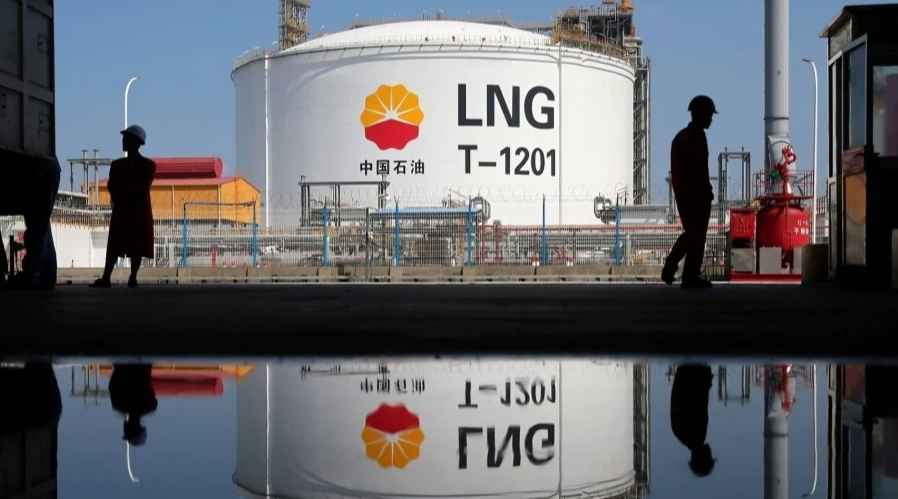
China also aimed to expand the annual handling capacity of its liquefied natural gas (LNG) terminals to 200 million tonnes and raise its overland pipeline import capacity to 114 billion cubic metres of natural gas every year to 2030.
The announcement comes as Beijing seeks to bolster energy security amid growing geopolitical risks, including the prolonged conflict in the Middle East and disruptions to shipping through the Strait of Hormuz.
Under the five-year plan for the oil and gas sector, China was targeting a domestic supply of 440 million tonnes of oil equivalent by 2030, while 20,000 km of new long-distance oil and natural gas pipelines would be added, bringing the national network to 220,000 km – enough to circle the Earth more than five times.
In addition to its overarching five-year plan, China sets sector-specific development plans across a wide range of sectors, outlining the government’s priorities and its targets for industries such as energy, manufacturing, technology and agriculture.
The five-year plan explicitly calls for China to reach peak oil consumption, as Beijing seeks to curb both oil demand and emissions through greater use of green fuels, improved energy efficiency and electrification.
Energy security has long been a strategic priority for Beijing, which has sought to reduce its exposure to external shocks by boosting domestic production, diversifying imports and building up oil and gas reserves, while accelerating electrification and the development of alternative energy sources.
The new plan also aims to maintain stable production at mature oilfields, such as Daqing in northeastern Heilongjiang province and Shengli in eastern Shandong province, while ramping up output from newer fields in the Inner Mongolia autonomous region, including Bayan and Jilantai.
China also plans to develop intelligent drilling rigs – automated systems equipped with sensors and digital controls that enable real-time monitoring and largely automated drilling – capable of reaching 15,000 metres, supporting Beijing’s push into onshore oil and gas exploration and production at depths beyond 10,000 metres.
The plan also aims to store 10 million tonnes of carbon dioxide annually by 2030 using carbon capture, utilisation and storage (CCUS) – a suite of technologies that capture industrial emissions and store them underground, including through the injection of carbon dioxide into oilfields to boost crude production.
In addition, the plan called for building a national oil reserve system, combining government stockpiles, mandatory corporate reserves and commercial inventories to better cushion against supply disruptions.
It also called for more exploration in major oil and gas basins, with a focus on both deep and ultra-deep reserves in Xinjiang’s Tarim Basin and southwestern China’s Sichuan Basin.
During the previous five-year plan period, China’s crude oil output rose to a record 216 million tonnes in 2025, while natural gas production increased by more than a third from 2020.
The country also completed its target of adding 16,500 km of oil and gas pipelines ahead of schedule, according to the National Bureau of Statistics in a report published in June.
Source: QATAR TRIBUNE