
2026-07-21
China’s High-Value Exports Defy Trade Tensions With the West
China’s push to move up the industrial value chain continues to gain momentum, with exports of high-value products such as robots, EVs and advanced manufacturing equipment expanding rapidly across major global markets, as Beijing navigates a global energy transition and an intensifying technological rivalry with the US.
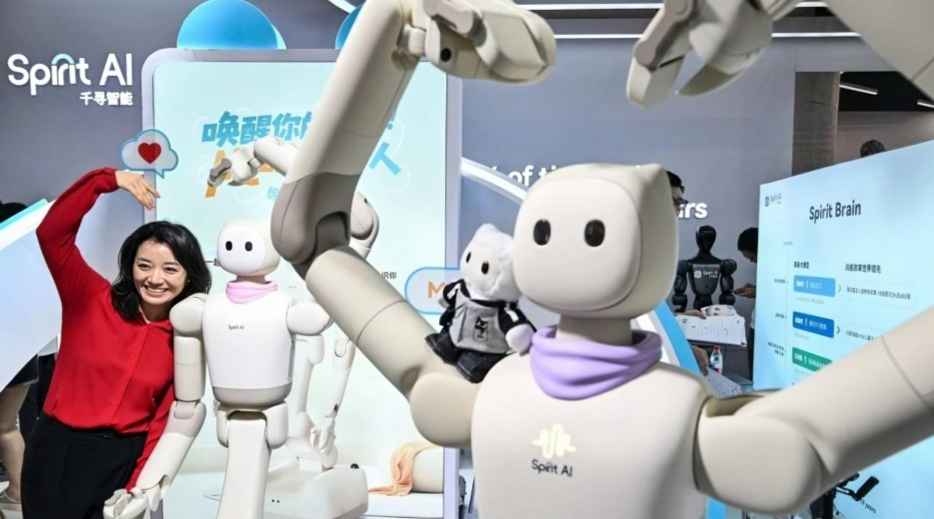
The country’s quadruped robots now account for nearly 70 per cent of global sales. Additionally, over 400 humanoid robot models have been developed domestically, representing more than half of the global total, according to the latest data from the Ministry of Industry and Information Technology (MIIT).
Customs data released on Monday also showed that China’s robot exports – including industrial, cleaning, surgical, and bionic – reached nearly US$600 million in June. More than 40 per cent of those shipments went to the European Union, while another 8 per cent were exported to the United States, according to the ministry.Overseas shipments of plug-in hybrid electric vehicles also doubled in volume, while exports to the EU tripled, making the bloc the largest market for Chinese vehicles.
This trend extended across China’s advanced manufacturing sector; MIIT said on Monday that equipment manufacturing shipments accounted for nearly half of industrial export growth in the first half of the year.
Despite a complex external environment and domestic structural challenges, the ministry said that “China’s advantages in a complete and resilient industrial system remain evident”.It added that the next five-year industrial plan would prioritise the development of an advanced manufacturing ecosystem.
Despite ongoing trade tensions with the West and disruptions to global commodity flows caused by the conflict in the Middle East, China has so far delivered strong export performance this year, with hi-tech products and high-value goods emerging as key drivers of growth. “‘Made in China’ used to mean cheap, but this is no longer the case,” said Alfredo Montufar-Helu, China-based managing director at Ankura Consulting.
“China’s export growth has become increasingly concentrated in tech and higher-value products, while low-value-add exports are stalling.” While state planning had helped to build an unrivalled industrial ecosystem, rising innovation capabilities and the tenacity of Chinese firms have also helped to close the quality gap, allowing Chinese goods to match – and in some cases surpass – Western standards, he said.
He added that intense domestic competition had pushed Chinese firms to lower their prices while continuing to scale production, resulting in high-quality products that were increasingly difficult for overseas consumers to resist.
Montufar-Helu said China’s focus on strengthening economic self-reliance, advancing new-quality productive forces and enhancing its role in global supply chains reflected Beijing’s efforts to build resilience in an increasingly volatile global environment.
“Economic conditions in Western markets have made it politically untenable to do nothing in the face of rising Chinese imports, especially in high value-added sectors that Western firms used to dominate,” he said.
“This is where we’re seeing industrial displacement and lay-offs make headlines, and it’s becoming a real driver of geopolitical friction.”
Meanwhile, China’s exports of wind turbines and lithium batteries both increased by over a third in the first six months.
Automobile exports exceeded 5 million units, MIIT said, adding that China accounted for more than 90 per cent of global ship completions, new orders and outstanding orders.
Beijing is now seeking to extend this industrial edge into artificial intelligence infrastructure.
MIIT pledged to expand computing clusters, improve coordination between computing resources and energy supplies, and establish standards for computing services and pricing.
Source: QATAR TRIBUNE