
2026-09-17
China’s Luxury Collapse: Why Global Brands Are Shutting Stores Amid Economic Strain
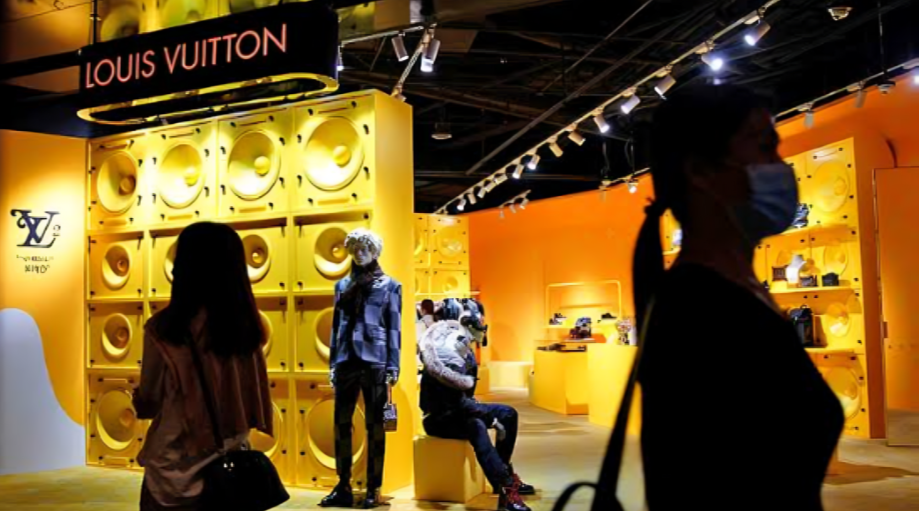
China’s once-booming luxury market, which for decades symbolized prosperity and modern consumer culture, is now facing an unprecedented contraction. International brands such as Louis Vuitton, Gucci, Balenciaga, and Rolex are closing stores across major cities, signalling a dramatic shift in consumer behaviour.
These closures are not isolated incidents but symptoms of deeper structural weaknesses in China’s economy, where wealthy consumers are rolling back spending, the middle class is collapsing under debt, and government policies are failing to stabilize demand.
Luxury boutiques that once thrived on conspicuous consumption now stand empty. The wealthy, once the backbone of China’s luxury boom, are increasingly reluctant to spend. Surveys reveal that high-net-worth individuals plan to cut luxury purchases by 10% this year, driven by tighter tax oversight, volatile financial markets, and the long-term weakness of the real estate sector. Premium spending, once a symbol of status, is now viewed as a risky burden. This frugality is not a mere change in taste but a defensive retreat in the face of economic uncertainty.
The upper middle class, burdened by mortgages, car loans, and education expenses, has been forced to liquidate luxury assets in the second-hand market. Yet even this market has collapsed, with Rolex watches and Louis Vuitton handbags losing thousands in value.
Inventory overload and falling resale prices highlight the desperation of families trying to convert status goods into survival cash. The collapse of the resale market is a striking indicator of how quickly wealth illusions can evaporate when confidence in the futuredisappears.
For the middle class, the situation is even more dire. Rising unemployment, shrinking savings, and mounting debt have shifted priorities from luxury consumption to basic survival. Once-vibrant malls and shopping districts have become ghost towns, reflecting the collapse of domestic demand.
Coffee shops, restaurants, and even fresh food markets are closing at alarming rates, underscoring the fragility of everyday businesses. The middle class, once celebrated as the backbone of China’s consumer economy, is now struggling to maintain even modestlifestyles.
China’s real estate sector, long the engine of household wealth, remains weak. Falling property values have eroded confidence, leaving families with heavy debt burdens and little disposable income.
The government’s response has been inadequate. Instead of expanding social safety nets, the Chinese Communist Party has relied on subsidies for credit card repayments, attempting to sustain the illusion of consumption. This short-term fix has failed to address the structural decline, prolonging the malaise rather thanresolving it.
The aftermath is visible across all social strata. The wealthy are retreating, the upper middle class is liquidating assets, and the middle class is abandoning malls altogether. The collapse of luxury consumption is not just about handbags and watchesit is a loud warning of a broader economic storm. As expectations fall to historic lows, survival has become the only priority for millions of Chinesehouseholds.
The once-celebrated consumer boom, built on real estate wealth and debt-driven optimism, has unravelled, leaving behind empty malls, collapsing second-hand markets, and a society grappling with uncertainty.
Globally, luxury brands remain resilient in Europe, the US, and Japan, proving that the downturn is uniquely Chinese. The closures of Louis Vuitton, Gucci, and Rolex boutiques mark the end of an era in China’s retail landscape and highlight the CCP’s failure to prevent economic downsizing. The contrast between China’s contraction and the resilience of other markets underscores how deeply domestic structural issues are driving this crisis.
The broader implications are sobering. China’s economic slowdown is not confined to luxury goodsit is spreading across industries, from premium liquor and tobacco to everyday retail and dining. Business owners are withdrawing socially, gatherings have disappeared, and even high-end liquor brands are facing unsold inventory. The disappearance of these consumption scenarios reflects a deeper collapse in confidence and business activity.
In the end, the contraction of China’s luxury market is a mirror of its wider economic challenges. The wealthy are cautious, the middle class is burdened, and the government’s policies are failing to restore confidence.
The closures of international luxury stores are not just retail events; they are symbolic of a society entering a harsh winter of economic uncertainty. For China, the challenge ahead is not merely to revive luxury consumption but to rebuild trust, stability, and opportunity across all levels of society.
Source: QATAR TRIBUNE