
2026-09-07
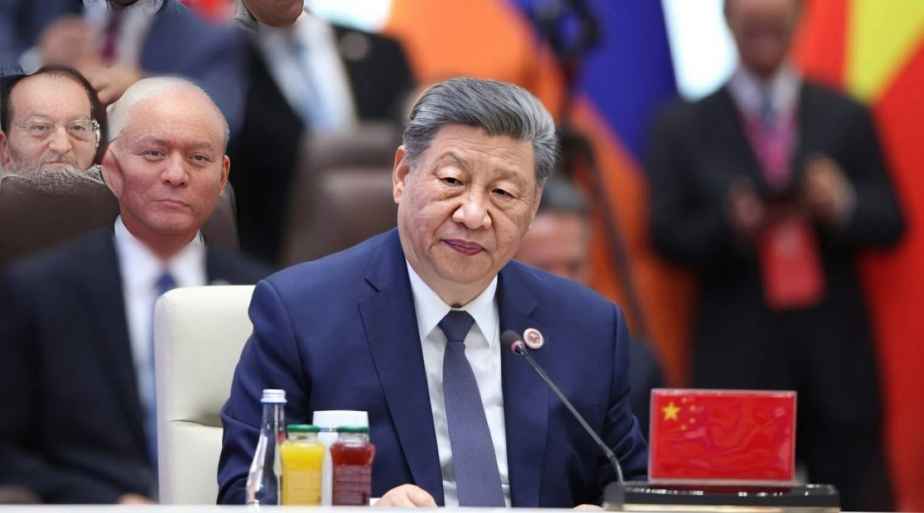
China’s President Xi Jinping Seeks To Bring Large CEO Delegation on US Visit
President Xi Jinping is preparing a large business delegation to accompany him on his visit to Washington, two sources said, an unusual move given US skepticism towards Chinese investment and Beijing’s strained ties with private enterprise. Xi rarely travels abroad with corporate executives, many of whom fell out of favor after Beijing’s regulatory crackdowns on the technology, education and property sectors that began in 2020. “The White House is not tracking a Chinese CEO delegation,” an official said. The White House did not explain what they meant by tracking.
The business delegation for the September 24 summit has not been previously reported. Reuters could not determine which executives would join the delegation.
The move is aimed in part at signaling China’s willingness to support investment and commercial ties with the US, while offering the White House some potential economic wins ahead of midterm elections, one of the sources familiar with discussions said.
Chinese companies have faced increasing scrutiny of their US investments and business operations in recent years. Washington has imposed a 100 percent tariff on imported Chinese EVs, banned foreign drone, router and robot imports, and forced the divestiture of TikTok’s US operations.
It also placed major Chinese tech firms on the Entity List of firms or organizations deemed a threat to national security and on a Pentagon blacklist.
Xi last brought a sizeable business contingent to the US in 2015, including Alibaba founder Jack Ma, Tencent founder Pony Ma, and executives from Chinese banks and state-owned firms.During that visit, China signed a $38 billion agreement for 300 Boeing aircraft and Xi met US technology executives including Apple’s Tim Cook, Meta’s Mark Zuckerberg and Amazon founder Jeff Bezos.
By contrast, US President Donald Trump has travelled to China with large delegations of American executives, including on visits in 2017 and May this year, seeking greater access to Chinese markets.
Trump took 18 American executives, including Nvidia CEO Jensen Huang and Elon Musk, to China in May, the sources said. “My sense is that the Chinese... are going to be more intentional about the role of these business people in having them join the delegation,” said Scott Kennedy, a Chinese business expert at the Center for Strategic and International Studies.
The participation of executives could prove “really valuable,” he said. Kennedy contrasted the Chinese approach with the organization of the US delegation in May, which he said was assembled at short notice and whose executives were “more wallflowers than serious participants.” The US Treasury declined to comment on this story.
The Office of the US Trade Representative and the State Department did not respond to Reuters’ requests for comment. China’s commerce ministry did not immediately respond to requests for comment.
China’s foreign ministry said both countries maintain communication on their leaders’ planned interactions this year, without elaborating.
The two nations announced formal mechanisms to manage trade and investment tiesin May.
However, three separate sources briefed on the matter said the Board of Investment is unlikely to produce significant deliverables at the summit because of the challenging US environment for Chinese investment.
Source: QATAR TRIBUNE