
2026-11-17
China’s Retail Sales Falter in October As Beijing Tests Pace of Consumption Boost
China’s economic activity was weaker than expected in October despite Beijing’s measured policy support, as retail sales growth slowed and fixed-asset investment contracted further, although analysts said the monthly softness was unlikely to derail Beijing’s campaign to meet its annual growth target.
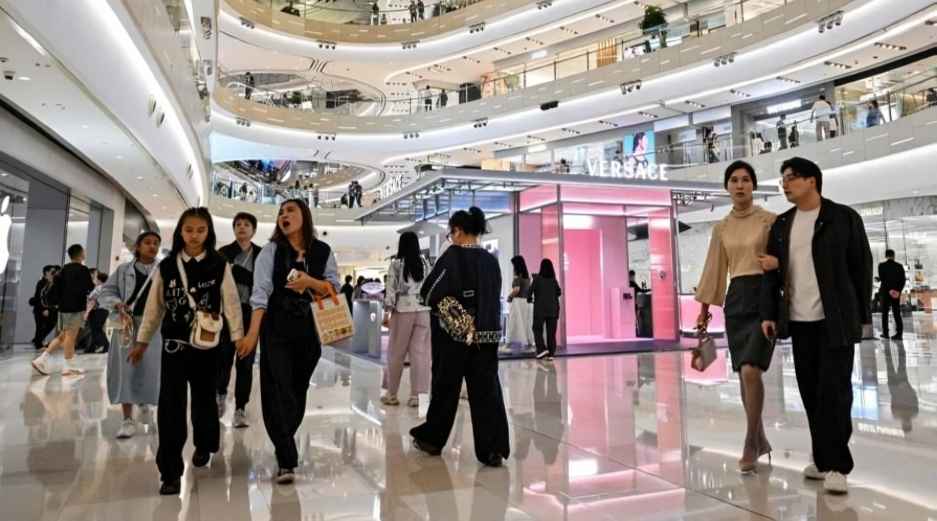
Retail sales, a key gauge of consumer spending, rose by 0.4 per cent year on year last month, according to data released by the National Bureau of Statistics (NBS) on Monday.
The reading missed a forecast of a 1.07 per cent rise from economists surveyed by Chinese financial data provider Wind, and was down from a 1.1 per cent increase in September. The weaker figures came even with last month’s National Day holiday, a week-long break where increased travel activity typically provides some support for consumption.
Overall fixed-asset investment – covering major items such as infrastructure, manufacturing and property construction – fell by 8.1 per cent year on year in the first 10 months of the year, compared with Wind’s forecast of a 6.92 per cent fall.
The figure widened from the 7.2 per cent decline recorded in the first three quarters.
Meanwhile, industrial output grew by 4.8 per cent in October – compared with 5.5 per cent in September – supported by strong export demand, partly because some carmakers moved quickly to ship vehicles under a four-year cap agreed between Beijing and Brussels, locking in sales ahead of potential tariff increases.
“The decline in certain indicators this October was, to some extent, influenced by factors relating to the Mid-Autumn Festival,” NBS spokeswoman Wang Guanhua said at a press conference in Beijing on Monday, adding that the holiday fell in September this year as compared with October last year, bringing some consumption forward.
But Wang noted that China’s economic performance remained “stable” for the year amid a transition to tech-driven growth and robust trade, saying the country was on track to achieve its growth target of 4.5 to 5 per cent this year. Zhang Zhiwei, president and chief economist at Pinpoint Asset Management, said economic activity in October was weaker than the market expected across the board, despite the NBS highlighting improvements in the quality of economic growth.
“As we are getting close to the end of the year, I don’t expect the macro policy stance to change this year. The key issue is how the government will set the growth target for next year.” Zhang also warned of downside risks to global growth next year, as the artificial intelligence investment boom may slow down, particularly after Jensen Huang stepped down as CEO of chip developer Nvidia following reports of extramarital affairs.
“The market was already worried about this risk before what happened at Nvidia. Now the risk has become even more serious,” he added.China is in the midst of a prolonged and uneven economic recovery, with subdued domestic demand weighing on growth as high exports help to compensate.To encourage more spending, some local authorities began offering government vouchers on the e-commerce platform Taobao last month for the Singles’ Day shopping festival.Meanwhile, Beijing has stepped up support for infrastructure alongside investments in areas such as AI, with state banks deploying 800 billion yuan (US$119.85 billion) in policy-based financial tools by late October.
“Data was broadly weak,” said Xing Zhaopeng, a senior China strategist at ANZ Research, adding the figures suggested the implementation of Beijing’s recent measures remained slow.
Source: QATAR TRIBUNE