
2026-08-06
Disputes Over AI, Robotics, Trade Mount Ahead of Planned Xi-Trump Summit in US
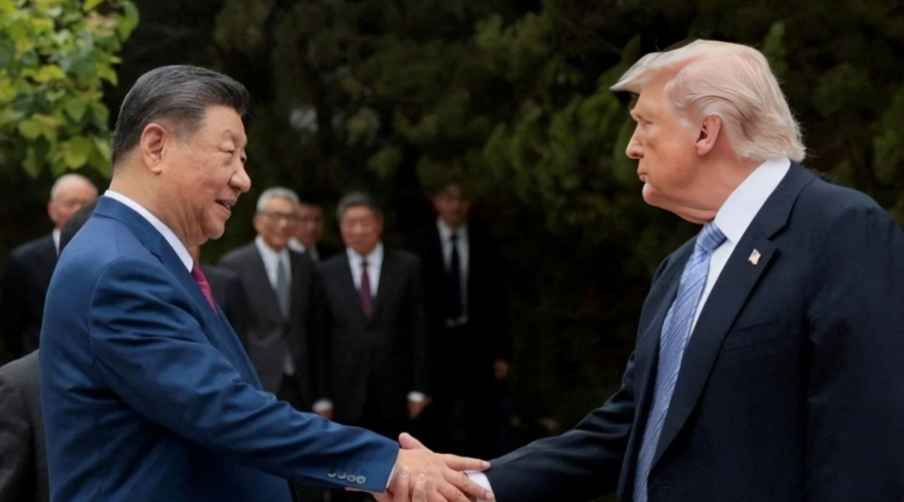
In the months leading up to President Xi Jinping’s planned September visit to Washington for a summit with US President Donald Trump, a series of smaller trade and technology rifts has emerged between the world’s two largest economies.
From tensions over Chinese artificial intelligence models and new US restrictions on advanced robotics, to optical modules and an expanded forced labour blacklist, this piece breaks down the latest developments shaping US-China economic ties.
The latest flashpoint in the US-China technology rivalry centred on Chinese AI models. In mid-July, Beijing-based start-up Moonshot AI unveiled Kimi K3, an open-weight large language model with 2.8 trillion parameters, which soon came under scrutiny in Washington.
Days later, White House Office of Science and Technology Policy director Michael Kratsios accused Moonshot of using model distillation to copy Anthropic’s Claude Fable model, while US Treasury Secretary Scott Bessent warned Chinese companies conducting “industrial-scale distillation attacks that cross the line into IP [intellectual property] theft” could face sanctions or be placed on the Entity List. Beijing rejected the allegations, with China’s commerce ministry calling the accusations “a typical act of AI hegemonism” and vowing to “take all necessary measures” to safeguard its legitimate rights and interests.
The call was echoed by the Communist Party’s leading theoretical journal Qiushi, which described the US move as “an act of hegemony cloaked in the guise of technology” while calling for joint efforts to oppose “AI hegemonism”. Last week, without naming China, the US Federal Communications Commission (FCC) expanded its Covered List to include two new categories of foreign-made equipment: advanced robotic devices and connected power inverters.
The move bans the import and sale of new robotic devices and power inverters but does not affect any previously bought devices.
The FCC alleged that advanced robotics created “extensive vulnerabilities and vectors for attacks that can manipulate the data and physical operation of the advanced robotic system”, while inverters introduced “additional vulnerabilities which compound as inverter-based resources proliferate on the US grid”.
In response, China’s foreign ministry said Beijing opposed the US’ “broadening of the concept of national security” to suppress Chinese companies, adding that protectionism would not enhance US competitiveness, but would only hurt the interests of US businesses and consumers.
On Thursday, Vice-Premier He Lifeng, Bessent and US Trade Representative Jamieson Greer held a video call, where the Chinese side voiced “serious concern” over the recent economic and trade restrictions imposed by the US on China, according to Xinhua.
Bessent, meanwhile, said he had stressed that Washington expected Beijing to “fully meet its commitments on rare earths and US agricultural products”, according to his social media post following the meeting.
On the heels of the high-level meeting, the US Department of Homeland Security added 43 Chinese companies to its own entity list under the Uygur Forced Labour Prevention Act, covering sectors ranging from food and cotton to pharmaceuticals, metals and lithium production.
The act was passed by Congress in 2021 to target imports from the Xinjiang Uygur autonomous region in western China and to prevent goods alleged to have been produced through forced labour from entering the US market.
Responding to the move, China’s commerce ministry on Saturday rejected allegations of forced labour in Xinjiang, describing the US action as “economic coercion” that “seriously” harmed the legitimate rights and interests of the companies concerned and the stability of global industrial and supply chains.
Another development emerged on Tuesday, when Reuters reported that the FCC was drafting a ban on imports of new Chinese-made optical transceivers – which carry data through fibre-optic cables in data centres – with officials aiming to publish and implement the measure later this year, citing sources familiar with the matter.
The move was intended to prevent Chinese-made devices from being used to steal data, deploy malware or disrupt operations at US data centres that power AI models, according to Reuters.
On Wednesday, Beijing hit back with countermeasures targeting US firms and new export restrictions on drones.
The commerce ministry announced that shipments of drones, key components and related technologies to the US will now face strict case-by-case scrutiny, effective immediately, citing national security and non-proliferation commitments.
At the same time, six US entities were added to China’s countermeasures list, banning Chinese firms and individuals from trading or cooperating with them. Beijing accused the companies of supporting US sanctions linked to Xinjiang. A seventh firm was blacklisted for assisting the FCC in introducing measures that “endanger China’s sovereignty”.
Source: QATAR TRIBUNE