
2026-11-09
Electric Auto Rickshaws Reshape India’s Roads
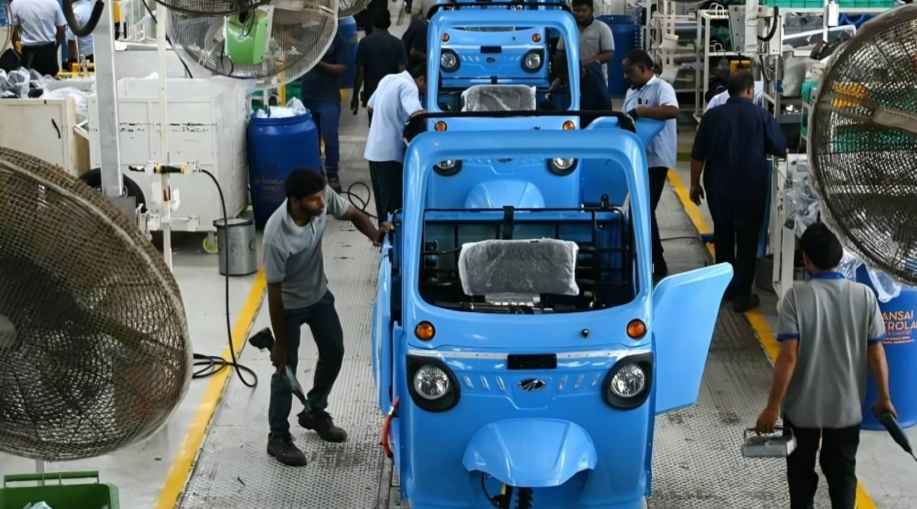
Every 90 seconds, an electric three-wheeler rolls off the production line at an Indian factory, a sign of the shift that has made India the world’s largest market for battery-powered auto rickshaws. At the plant run by Mahindra Last Mile Mobility, workers and robots fit cells into battery packs, attach body panels to frames and fix wheels in place to meetdemand.
In September, more than half of all new three-wheelers sold in India were electric, compared with about 8.5 percent of cars and 11.6 percent of two-wheelers. “Our company has grown six times in its EV penetration in the last five years,” said Mahindra LMM chief executive Suman Mishra. She said government subsidies, better vehicles and lower running costs had sped up adoption over the past two years.
E-rickshaws first appeared in New Delhi more than a decade ago, often built in roadside workshops by fitting Chinese-made batteries to modified pedal tricycles. The sector has since taken market share from sturdier fossil-fuel models. Across northern India, e-rickshaws now queue outside railway stations and markets, replacing the thumping noise of traditional “tuk-tuks”. For many drivers, though, earnings matter more than the environment. “Money is coming straight into my pocket,” said Afroz Alam, 31, a driver in Hyderabad who switched from a gas-powered model this year. He said cheaper charging saves him several hundred rupees a day, which helps him repay the loan he took out for the more expensive electric vehicle (EV).
Analysts say economics is the main driver, as battery costs fall and fuel prices rise. Indian think tank CEEW estimated in 2025 that petrol three-wheelers cost more than twice as much per kilometer to run over their lifetime as EVs. The shift has also been welcomed by policymakers in India, which imports most of its oil and gas and has struggled to manage energy costs since conflict erupted in the Middle East in February.
Source: QATAR TRIBUNE