
2026-09-22
How China Is Stealing America’s Artificial Intelligence
American companies will spend roughly $700 billion this year on the physical build-out of artificial intelligence: data centers, chips, and computing power. Every dollar is a bet on American capitalism—that the advances those facilities help produce will earn enough to fund the next breakthrough.
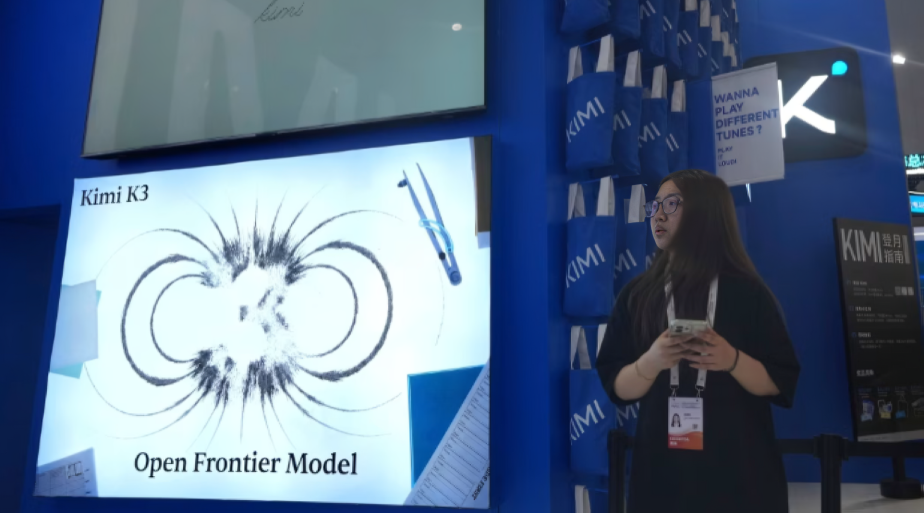
The advent of Chinese open-weight models is undermining that bet, not just by ordinary competition, but by theft. (Open-weight means its code is freely downloadable and customizable, unlike its proprietary U.S. rivals.) Chinese AI models like DeepSeek, Moonshot’s Kimi K3, and Alibaba Cloud’s Qwen barely registered in American C-suites before last year. They now run inside Airbnb, Coinbase, DoorDash, and many others.
China’s prowess is attributable in part to real ingenuity. It also owes much to a technique called distillation, in which a state-of-the-art American model is asked millions of questions, its answers are recorded, and a new model is trained on them—inheriting much of the original’s capability without needing anything like the research and investment that produced it. Done with permission, it’s an acceptable research practice. Apple pays Google to distill the latter’s Gemini model and make a smarter Siri. University labs use the technique to study how models work.
US security agencies on Tuesday accused six Chinese artificial intelligence companies of systematically exploiting American AI models to train their own systems. The agencies, including the National Security Agency and the Federal Bureau of Investigation, said the Chinese companies have engaged in “aggressive, malicious, and targeted distillation activities at an industrial scale.”
The key word is “distillation,” a technique by which a new AI model taps the expertise of an existing one. Here is a guide to the issue and how it will affect the US-China race for supremacy in AI, with President Trump set to meet Chinese leader Xi Jinping this month.
The concern for US policymakers is that large-scale distillation could allow Chinese developers to narrow the performance gap with leading American models while spending significantly less on research and computing infrastructure. This could put pressure on the economic returns expected from the massive US investment in AI.
Distillation itself is not inherently illicit. It is widely used in AI research and commercial development, and its legality can depend on how models are accessed and how their outputs are used. The US allegations focus on what officials describe as systematic and unauthorised efforts to extract capabilities from American models at scale.
The dispute adds another layer to the broader US-China competition over artificial intelligence, alongside restrictions on advanced chips, computing infrastructure and technology exports. For US companies, the challenge is to protect intellectual property and technological advantages while continuing to develop increasingly capable models in a rapidly evolving global market.
The issue is likely to remain a key point of discussion as Washington weighs further measures to protect US AI technology, while Chinese companies continue to expand their capabilities and compete in global markets.China’s Moonshot AI released its Kimi K3 model in July.
Source: QATAR TRIBUNE