
2026-09-14
Mideast Stocks: Saudi Shares Drop After Pipeline Attack, Leading Gulf Decline
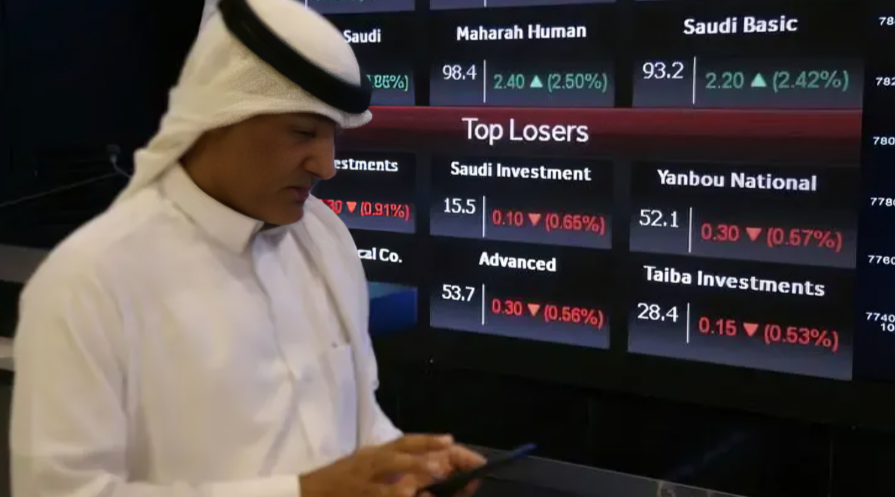
Saudi shares fell on Sunday as new strikes on the kingdom and on ships in the Gulf tested nerves in the Middle East days after an attack on a Saudi oil pipeline.
Saudi Arabia's benchmark index <.TASI> dropped 1.3%, its biggest intraday fall since early April, weighed down by a 1.2% decline in Al Rajhi Bank <1120.SE> and a 3.2% slide in Saudi Arabian Mining Company <1211.SE>.
Oil giant Saudi Aramco <2222.SE> slipped 1.6%, while Saudi Aramco Base Oil Co - Luberef <2223.SE> plunged 10% to emerge as the session's worst performer.
The sell-off followed a precautionary shutdown of the East-West pipeline after aerial strikes on Thursday struck installations across the Riyadh and Medina regions, causing several injuries.
Both Riyadh and Baghdad traced the attack to Iraqi territory, where Iran-backed militias operate, prompting the Iraqi government to dismiss a senior military commander on Saturday.
While Saudi Arabia withheld immediate military retaliation following an appeal from Iraq's prime minister, Riyadh asserted its right to defend its sovereignty and critical infrastructure.
U.S. President Donald Trump on Saturday directly blamed Iran for the strikes on the conduit, which serves as the kingdom's primary export alternative to bypass the Strait of Hormuz.
Saudi Arabia faces an imminent shortage of export crude unless it restarts its key Red Sea pipeline within days — a disruption that could knock out up to 4% of world oil supply, traders and buyers warned.
The potential shortfall looms over an already strained global market, where surging energy costs have exacerbated worldwide inflation and driven U.S. bond yields to their highest marks since 2008.
Persistent maritime disruptions and the continued closure of the Strait of Hormuz kept investors on edge, with market sentiment likely to remain restrained without a swift breakthrough at Monday's planned diplomatic talks in Oman between Iran and Gulf states, Milad Azar, market analyst at XTB MENA, said.
Elsewhere in the Gulf, Qatar's benchmark index <.QSI> bucked the regional trend, rising 0.3% on the back of gains in the Gulf's biggest lender, Qatar National Bank <QNBK.QA>.
Gulf foreign ministers plan to meet their Iranian counterpart on Monday in an Oman-backed push to secure an interim deal on managing traffic through the Strait of Hormuz, the Financial Times reported on Friday.
Outside the Gulf,
Egypt's blue-chip index <.EGX30> lost 1.1%.
Saudi Arabia <.TASI> fell 1.3% to 10,865
Qatar <.QSI> rose 0.3% to 9,849
Egypt <.EGX30> fell 1.1% to 55,665
Bahrain <.BAX> was flat at 1,930
Oman <.MSX30> closed flat at 7,647
Kuwait <.BKP> lost 0.2% to 9,306
Source: ZAWYA