
2026-08-30
Qatar Takes Centre Stage As Doha Set To Host UN World Investment Forum
Doha is all set to host the ninth World Investment Forum (WIF) from October 25 to 27, bringing the global investment community to Qatar for high-level discussions on how investment can drive sustainable development and resilience amid geopolitical tensions, economic fragmentation and rapid technological change.
Convened by UN Trade and Development (UNCTAD) in partnership with the State of Qatar, the three-day forum will be held under the theme “Investing in the Future” and is expected to bring together policymakers, investors, business leaders, international financial institutions and investment authorities from around the world.
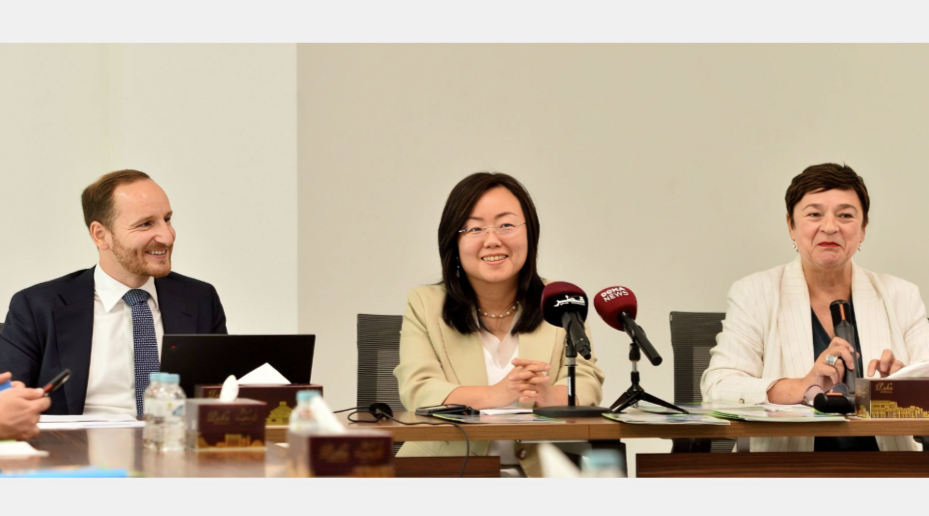
Speaking at a press conference in Doha, UNCTAD officials said the decision to hold the United Nations’ flagship investment forum in Qatar reflects the country’s growing role as an international investment hub and a platform connecting governments, capital and the private sector.
The World Investment Forum is held every two years and rotates among different countries. The organisers said Doha’s position as an international transport hub, its open investment environment and its ability to provide a neutral platform for global dialogue were among the factors behind its selection as host. Qatar previously hosted the forum in 2017.
The forum will provide Qatar with an opportunity to showcase its investment ecosystem and highlight emerging opportunities in the country, while also placing Doha at the centre of discussions on the future direction of international investment.
UNCTAD said the forum comes at a critical juncture for the global economy, with geopolitical tensions, economic fragmentation and rapid technological change reshaping investment flows and the organisation of global supply chains.
Under the “Investing in the Future” theme, WIF 2026 will seek to bring those responsible for investment policy together with those allocating capital.
The programme will cover a wide range of areas, including artificial intelligence, critical minerals, energy, infrastructure, sustainable finance, tourism and culture, as well as emerging investment opportunities in the space economy.
The programme will feature Global Leaders Plenaries, Ministerial Roundtables on investment and entrepreneurship, the Sustainable Stock Exchanges Dialogue, a high-level session on investment in the Gulf region and a global investment promotion conference showcasing investment opportunities from around the world.
The organisers said the forum will also connect ministers and government representatives with sovereign wealth funds, financial institutions, entrepreneurs and the private sector, with the objective of turning investment discussions into concrete partnerships and development opportunities.
One of the new features of this year’s forum will be a dedicated focus on the space economy, which was not included in previous editions.
The session is being organised in partnership with the UN Office for Outer Space Affairs and will examine how countries can develop their space economies, attract investment and overcome barriers to participation in the emerging sector.
UNCTAD officials said the objective is to ensure that opportunities in the space economy do not remain concentrated among only a handful of countries, while exploring avenues for international cooperation and investment partnerships.
Artificial intelligence will also be a major theme, with discussions focusing on investment in AI infrastructure, the adoption of new applications and how developing economies can participate in the rapidly evolving technology landscape.
Sustainable investment will form another major pillar, including discussions involving stock exchanges and companies on sustainability standards, corporate governance and preparations for sustainable listings.
The Doha forum comes as Qatar continues to strengthen its position as an international investment destination.
Data from UNCTAD’s World Investment Report 2026, presented at the press conference, showed that Qatar ranked fourth among GCC countries in total FDI inflows in 2025, after the UAE, Saudi Arabia and Oman. On a per-capita basis, Qatar ranked among the top three in the region.
Qatar also recorded a significant increase in FDI inflows between 2024 and 2025. The three sectors identified as driving FDI into Qatar were chemicals, energy and ICT, pointing to an investment profile that is gradually expanding beyond traditional energy-related activities.
The forum will draw on Qatar’s wider investment ecosystem, with key national institutions including the Qatar Investment Authority, Qatar Financial Centre and Qatar Stock Exchange involved in preparations and discussions. Qatar Foundation and Qatar Museums have also been engaged in developing the programme around innovation, culture and future investment opportunities.
The Qatar Investment Authority will be an important partner given its role as one of the world’s major sovereign investors and its extensive international investment activities.
The World Investment Report 2026 shows that global FDI recovered in 2025, increasing 6 percent to $1.6 trillion, ending two consecutive years of decline.
However, the recovery remains uneven and increasingly concentrated. More than 80 percent of global FDI went to the 20 largest host economies, while investment in developing economies increased by only 2 percent.
The concentration is particularly evident in strategic sectors. Advanced technologies, critical minerals, energy-transition technologies, semiconductors and AI infrastructure together accounted for 44 percent of the value of global greenfield investment projects in 2025, up from just 16 percent in 2020.
Investment in infrastructure increased by 11 percent in 2025, semiconductor investment also rose 11 percent, while investment in the digital economy increased by almost 50 percent.
UNCTAD officials said the changing investment landscape means governments are becoming more strategic in attracting foreign capital, with incentives increasingly targeted at specific sectors. The number of countries operating FDI screening regimes has also risen from 21 in 2016 to 52 in 2025.
The forum will also give particular attention to investment in the Gulf region, which has significantly increased its weight in global investment flows.
The GCC’s share of global FDI increased sixfold over the past decade, from around 1 percent in 2015 to about 6 percent in 2025, highlighting the region’s growing importance as an international investment destination.
The UAE led the GCC in total FDI inflows in 2025, followed by Saudi Arabia, Oman and Qatar. Energy and gas supply remains the leading investment sector, but the region is becoming more diversified, with ICT investment now almost on par with energy and gas. Extractive industries and automotive investment have also recorded significant growth.
The organisers said the timing of the Doha forum was particularly important given the current geopolitical environment. Despite regional and global uncertainties, they said Qatar provides an opportunity to demonstrate that the Gulf remains open to investment, collaboration and long-term development.
Around 20 ministers had already been confirmed for the forum at the time of the press conference, while heads of several international organisations are also expected to attend. Based on previous World Investment Forums, participation could extend to representatives from more than 100 countries.
Source: QATAR TRIBUNE