
2026-09-21
‘Qatar To Double LNG Capacity to 145 Million Tonnes by 2030’
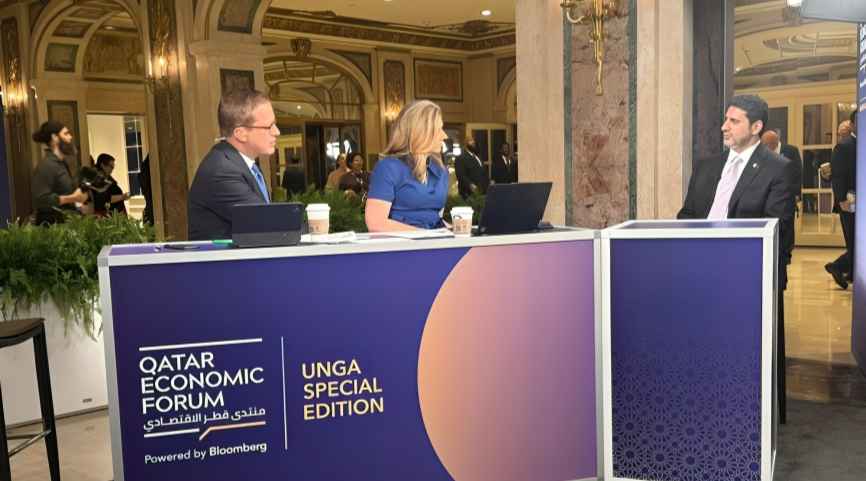
Qatar will proceed with plans to expand its liquefied natural gas production capacity despite damage sustained by LNG facilities, Sheikh Bandar bin Mohammed bin Saoud Al Thani, Governor of Qatar Central Bank and Chairman of Qatar Investment Authority, said in a television interview with Bloomberg TV.
Speaking on the sidelines of the Special Edition of the Qatar Economic Forum 2026, Powered by Bloomberg, in New York alongside the United Nations General Assembly, Sheikh Bandar said Qatar remained committed to its expansion plans.
A new expansion project is being advanced that will double Qatar’s LNG production capacity to 145 million tonnes per year by 2030, he said. The non-hydrocarbon sector grew 3.5% despite regional challenges, while Qatar reduced its debt-to-GDP ratio from 60% to 40%, while maintaining a sovereign credit rating of AA.
The contribution of the non-hydrocarbon sector to Qatar’s GDP has increased from 40% in 2011 to approximately 70% in recent years.
Sheikh Bandar attributed the increase to the accumulation of fiscal surpluses over the past years, as well as the establishment of reserves and funds that have strengthened the economy’s resilience in addressing challenges.
Qatar also has a strong external financial position and substantial reserves held by Qatar Central Bank, alongside one of the world’s largest sovereign wealth funds. These financial strengths enhance the country’s ability to navigate challenges and capitalise on growth opportunities as conditions in the region improve, he said.
The Qatar Investment Authority is pursuing a long-term investment strategy focused on creating sustainable value for future generations.
The strategy has placed increasing emphasis on technology, artificial intelligence and innovation, particularly in the United States, while QIA continues to invest across a range of sectors as part of its broader diversification strategy.
Meanwhile, Qatar Central Bank is implementing 18 artificial intelligence projects, four of which have been completed. The projects have helped reduce costs and accelerate workflows, while the central bank continues to invest in AI and leverage the technology to further develop and enhance its operations.
Source: QATAR TRIBUNE