
2026-08-23
UK Retail Sales Drop, While Government Borrowing Rises
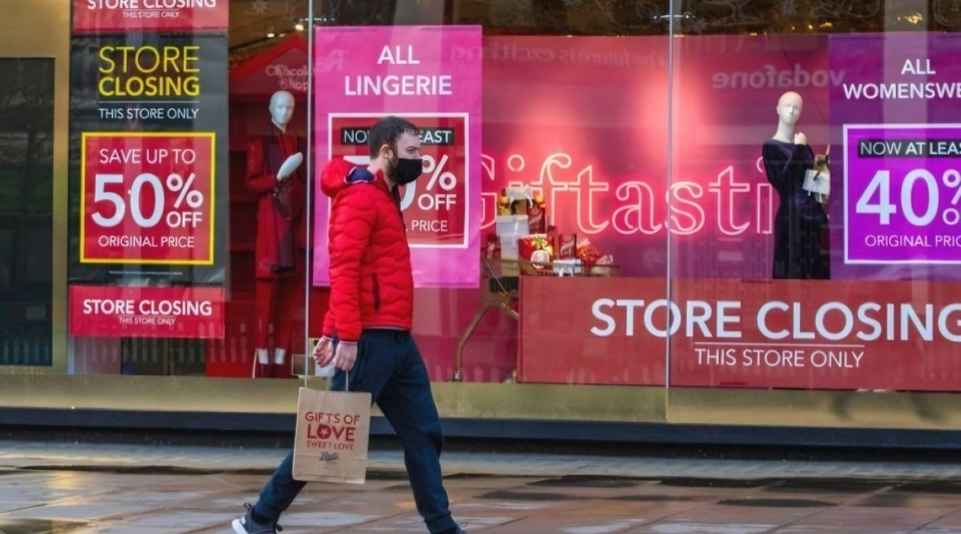
British retail sales fell back as expected in July after a surge in June when hot weather boosted demand for fans and air conditioners and supermarkets offered promotions alongside the men’s soccer World Cup, official figures showed on Friday.
Retail sales volumes last month dropped 0.5 percent from June, in line with economists’ median forecast in a Reuters poll, while annual sales growth slowed to 1.6 percent in July from a downwardly revised 3.8 percent, slightly below expectations for a fall to 2.2 percent. The biggest drag came from clothing and footwear sales, which fell by the most since May 2025, down 2.7 percent on the month, after many stores began summer sales in June rather than July.
Sterling was little changed against the dollar after the data, which came alongside figures showing more government borrowing than expected in July. “July’s 0.5 percent fall in UK retail sales volumes should probably be read as a pause rather than the start of a renewed consumer downturn,” said Martin Beck, chief economist at WPI Strategy.
Consumer sentiment surveys suggest demand has proven robust, despite higher energy costs caused by the US-Zionist war with Iran, offering a boost to new Prime Minister Andy Burnham, who has tried to mollify voter anger about the cost of living since taking office in July. Beck said the government’s decision to remove value-added tax from household electricity bills from October was likely to boost demand later in the year, and that global energy prices looked less threatening than a few weeks ago.
But there was a risk households could worry about the prospect of higher taxes in finance minister John Healey’s October budget, he said, despite Burnham’s pledge to stick with Labour’s promise to keep the rates of all major taxes unchanged. GfK’s long-running confidence indicator, released earlier on Friday, rose to a two-year high in August — its highest since just after Burnham’s predecessor Keir Starmer came to power.
However, Jacqueline Windsor, head of retail at PwC UK, said headwinds to consumer spending were likely to strengthen later this year when regulated household energy prices look set to be increased.
“We do not expect the current run of retail sales outperformance to last into autumn and the critical run-up to Christmas,” she said. Recent updates from major British retailers have revealed mixed fortunes. Clothing retailer Next ledged up its annual profit outlook for the third time this year, with sales boosted by the country’s prolonged period of hot weather.
However, sportswear and fashion retailer JD Sports issued a profit warning, though it was weakness in US markets, rather than in Britain, which prompted it. Meanwhile, Britain’s government recorded an unexpected budget deficit last month, a reminder of the financial constraints facing new finance minister John Healey ahead of his October budget in spite of recent better news on the economy.
The Office for National Statistics (ONS) said public sector net borrowing was £1.8 billion ($2.5 billion) in July, as higher government spending caused by inflation counteracted record self-assessed income tax receipts for the month.
A Reuters poll of economists had pointed to a balanced budget, while the Office for Budget Responsibility’s (OBR) projections had pencilled in a £500 million surplus — which would have been the first for any July since before the COVID-19 pandemic.
But the ONS said central government expenditure on social benefits was up £2 billion in July compared with a year ago, while spending on goods and services which includes staff costs was up £1.2 billion.
The deficit for June was revised down sharply to £12.8 billion from £16.0 billion. Still, borrowing for the first four months of the 2026/27 financial year remains higher than the OBR’s forecast, at £56.7 billion versus £54.4 billion. “We expect government borrowing to exceed the OBR forecast over the rest of the year as spending continues to rise,” said Thomas Pugh, chief economist at tax and consulting firm RSM.
“Higher gilt yields, stubborn inflation, and a government determined to spend more means borrowing is on course to remain above 4 percent of GDP this year, instead of falling to 3.6 percent as projected.”
The current budget deficit, which measures day-to-day spending against tax revenues and must be balanced in 2029/30 according to the current fiscal rules, stood at £34.7 billion over the April-July period, against the OBR’s projection of £36.7 billion. “Fiscal discipline is the bedrock of our UK economic stability and national security which is why we are committed to meeting our fiscal rules, with a buffer against global uncertainties,” Healey said in a statement.
Source: QATAR TRIBUNE