
2026-11-09
US Data Center Industry Faces Tougher Regulatory Climate
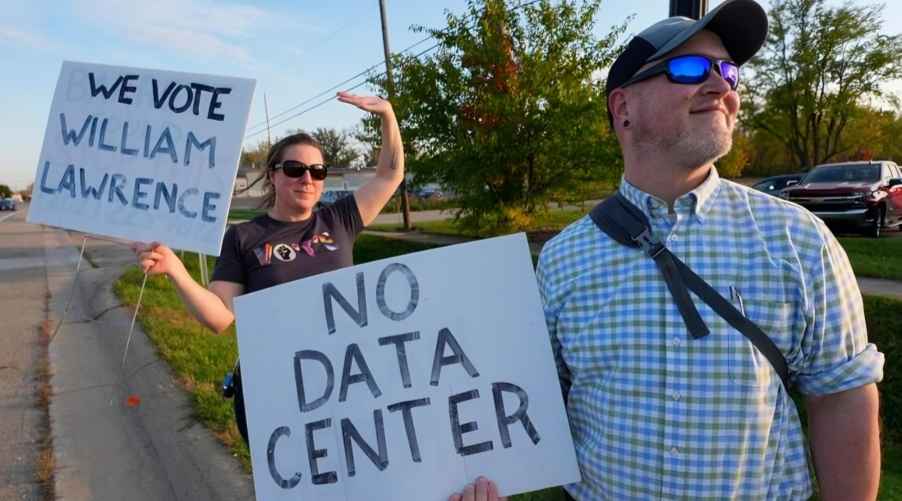
After a campaign season filled with outrage against data centers, the midterm elections ushered in a wave of Democrats pledging to clamp down on the energy-hungry behemoths.
A tougher regulatory environment for artificial intelligence giants and data center developers is expected to follow, even if President Donald Trump perhaps the industry’s biggest champion stalls any federal crackdown.
Data center regulation itself was not on most midterm ballots, and it wasn’t among the top issues for most voters. But hardline stances against the server warehouses were woven into the platforms of many candidates, including the Democrats who upended longtime Republican control of the governorships in Texas, Ohio, Georgia, Nevada and Iowa, many of which are data center hotspots.
Skepticism of data centers, and their impact on electricity prices, often blended with the fight for affordability — a key campaign talking point for Democrats.
In Texas, Clayton Tucker, the first Democrat elected state agriculture commissioner since 1986, said his pledge to fight data center development was critical to his victory. Everywhere he went, he said, ranchers worried that data centers posed an existential threat to their dwindling water supplies.
“You know, there’s an old saying around here that ‘whiskey’s for drinking and water’s for fighting,’” Tucker told The Associated Press. “And that’s exactly what happened.” According to data from AdImpact, campaigns large and small spent more than $380 million on television ads mentioning data centers. Democrats outspent Republicans on the topic by more than three to one.
Sweeping wins by Democrats could have far-reaching implications for data centers. Besides taking control of Congress, Democrats flipped at least five governors’ offices and took full control of state governments in five more states: Wisconsin, Minnesota, Pennsylvania, Nevada and Michigan.Data Center Watch, a project of AI security consultancy 10a Labs, said it tracked winning candidates for Congress and governorships and found the vast majority had expressed support for stronger regulation or even a moratorium.
Among governors, 32 of the 34 victorious candidates in races where AP called a winner support stronger regulation or restrictions. Twelve of the 34 support bans or moratoriums, it said.
During the campaign, Wisconsin Gov.-elect David Crowley, a Democrat, changed his position under pressure from his Republican opponent to take a harder line against data centers. Initially opposed to any moratorium, Crowley later said he supported one as well as abolishing the state’s sales tax exemption for data center operators and developers.
In an interview Thursday with AP, Crowley said he’s having discussions now about what he’ll propose once he takes office.
In the mix are things like requiring developers to disclose more about their water and energy consumption, ensuring a community supports a project before it can go forward and insulating ratepayers and taxpayers from the energy costs of the projects, Crowley said.
AI giant OpenAI published a framework Thursday enumerating new commitments to the communities where it develops data centers.
The company said it was asking federal, state and local policymakers to write “clear rules for how the industry builds.” “Lawmakers should establish rules to advance responsible investment, protect residents, and ensure that the benefits of AI infrastructure are broadly shared,” the post said.
An industry association, the Data Center Coalition, echoed the sentiment that developers need to keep trying to build trust with public officials and communities. A coalition official, Dan Diorio, said the industry is aware many midterm winners have vowed to impose a moratorium.
“We should expect them to want to deliver on those promises, but there are going to be real world consequences of that,” Diorio said in an interview.
Those consequences, Diorio said, could include host communities missing out on tax revenue or payments from tech companies. Data centers are also driving a broader economic expansion that encourages investment in domestic manufacturing, he said.
The election of data center skeptics adds challenges to stock markets riding high on the AI boom.
Source: QATAR TRIBUNE