
2026-10-28
WIF Outlines Measures To Mobilise Development Capital
The World Investment Forum 2026 concluded in Doha on Tuesday with a series of initiatives to mobilise capital for developing economies, including a global investment risk-sharing proposal, financing tools for artificial intelligence (AI) infrastructure and reforms to international investmentagreements.
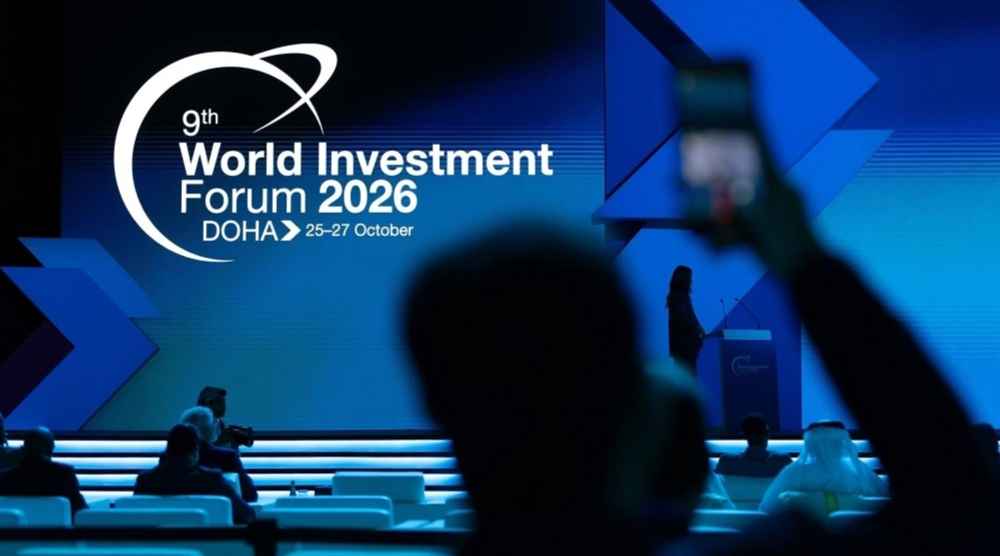
Organised by UN Trade and Development (UNCTAD) and hosted by Qatar from October 25 to 27, the ninth edition addressed widening investment gaps and declining project announcements in critical development sectors.
According to UNCTAD’s World Investment Report 2026, more than 80 percent of global foreign direct investment went to just 20 economies in 2025. Meanwhile, announcements of new projects in developing countries across infrastructure, energy, healthcare and food systems fell by more than 25 percent, based on annualised figures in the latest Global Investment Trends Monitor.
The proposed Global Initiative for Investment Risk Sharing seeks to attract public and private capital by addressing high borrowing costs, political and regulatory uncertainty, currency risks and limited project preparation capacity. UNCTAD and the Berne Union also announced plans to strengthen cooperation on investment insurance and risk mitigation.
The forum highlighted challenges facing developing economies in attracting investment in AI infrastructure. Announced investment in data centres in these economies fell by $32 billion, according to UNCTAD figures.
The Digital Infrastructure Investment Catalyser, convened by UNCTAD, the International Telecommunication Union and the World Bank, expanded partnerships and introduced resources to help countries prepare projects and secure financing. A forthcoming Digital and AI Infrastructure Investment Playbook will support low- and lower-middle-income countries in planning infrastructure and developing commercially viable projects.
The expanded UNCTAD Ocean Economy and Small Island Developing States Fund announced its first funded project in São Tomé and Príncipe, focusing on marine and coastal tourism and related environmental and digital services. Further initiatives will support ocean industries, including seaweed production.
UNCTAD and UN Tourism agreed to strengthen cooperation on tourism investment, while the Global Founders Fellowship will connect entrepreneurs from developing countries with investors, mentors and international markets.
UNCTAD launched new principles to help governments modernise international investment agreements while retaining the flexibility to pursue development priorities. Technical assistance will support greater transparency and simpler administrative procedures.
Nine agreements and partnerships announced in Doha cover economic diversification, regional integration, investment promotion and policy facilitation. Partners include the League of Arab States, the Caribbean Association of Investment Promotion Agencies and Qatar’s Ministry of Commerce and Industry.
UNCTAD and UNESCO also launched CreativeInvest to connect investors with opportunities in arts, culture and heritage. Other initiatives address green investment and ways to better account for long-term value creation and human well-being.
Three regional investment reports covering the Caribbean, Eurasian Economic Union and Gulf Cooperation Council will provide insights into investment trends and policy challenges. A permanent Chief Economists and Investors Dialogue and new sustainability reporting guidance aim to strengthen investment decisions and transparency.
The initiatives form part of the Doha Global Investment Action Framework, comprising more than 20 outcomes across six priority areas. The forum brought together more than 7,000 participants, including four prime ministers, over 60 ministers and more than 200 international journalists.
UNCTAD will work with governments and partners to translate the outcomes into concrete investment opportunities, with the key challenge being to convert commitments into financeable projects and actual capital flows.
Source: QATAR TRIBUNE